Traditional healing practices are widespread in West Algeria, ranging from herbalism to cauterization and cupping, often preferred by many as an alternative to modern medicine.
Folk medicine meaning and concepts
Perspectives on folk medicine meaning vary; some view it as a return to inherited health and social cultures to preserve identity, while others see it as a reflection of a community’s adherence to its roots to strengthen belonging. On the other hand, the World Health Organization describes these as traditional and historical medical patterns that preceded the emergence of contemporary scientific medicine.
Folk medicine in western Algeria practices
Residents of the Tafna basin in West Algeria utilize various means for healing, the most prominent of which include:
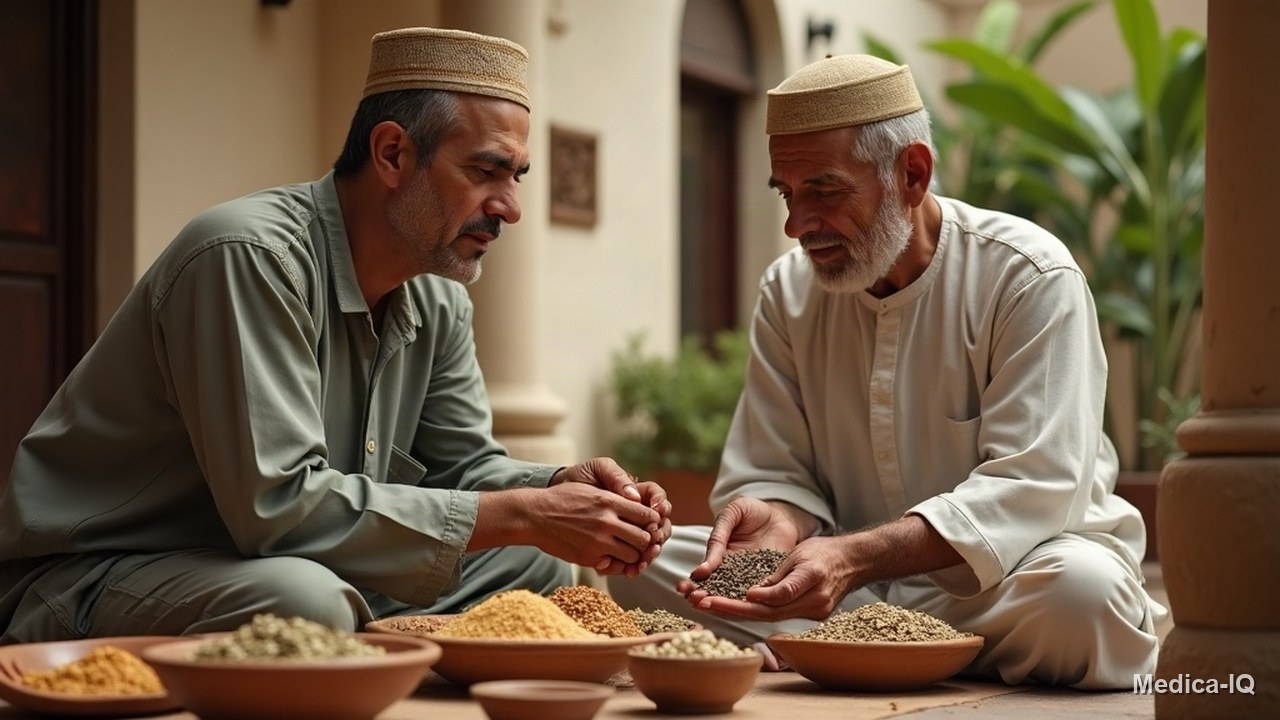
- Herbal Medicine: More than half of the Algerian population uses oil-based and herbal recipes, preferring them over visiting doctors, especially with the rising cost of pharmaceuticals. The number of herbalists in the region exceeds 3,000 people. Patients are divided between those who seek a doctor’s diagnosis before visiting a herbalist and those who seek both diagnosis and treatment directly from the herbalist.
- Cauterization: Used in villages to treat conditions where modern medicine may struggle, such as disc pain, fractures, and joint issues. This craft is often practiced by elderly men who inherited it from their ancestors, many of whom have no formal education.
- Cupping (Hijama): Used to stimulate blood circulation and treat digestive system disorders, irritable bowel syndrome, asthma, and back and neck pain, as well as infertility and depression. Some physicians have adopted this practice under the term “medical cupping.”
- Bone Setting: The “Mujabbirati” (bone setter) aims to fix sprains and fractures and treat spinal and disc problems. Despite the prevalence of orthopedic surgeons, this treatment remains in demand due to its low cost and simple tools.
- Massage: Practitioners were known as “Massadoun.” Historically limited to women in hammams and during childbirth, it has now evolved into beauty centers visited by both men and women to restore fitness.
- Spiritual Healing: This begins with Ruqyah (legal incantation) and has evolved to include treating cases of jinn possession, as well as using the Quran to deal with incurable diseases like diabetes and cancer, or psychological conditions.
Circumcision in rural areas
In villages and remote areas of West Algeria, circumcision practices persist, with some linking the circumcision of boys to religious occasions such as Ramadan. Despite the World Health Organization’s warnings and strict prohibition of female genital mutilation, some areas still follow this practice due to cultural heritage or religious beliefs.
FAQ
What are the most prominent traditional treatments in West Algeria?
These include herbal medicine, cauterization, cupping, bone setting, massage, and spiritual healing using the Quran and Ruqyah.
Why do some prefer folk medicine over modern medicine?
This is due to several reasons, including lower costs compared to modern medicine, the simplicity of the tools used, adherence to inherited identity and culture, and the high price of medications.
Do doctors practice some types of folk medicine?
Yes, there are doctors in Algeria who practice “medical cupping” to treat a range of physical and psychological ailments.
When should you visit a doctor?
You should immediately go to specialized medical centers in the following cases:
- For severe fractures requiring surgical intervention or diagnostic imaging.
- When symptoms of chronic diseases such as cancer or diabetes appear, which require scientific treatment protocols.
- If traditional treatments fail to alleviate chronic pain.
- When experiencing acute psychological symptoms that require the intervention of psychiatric specialists.
Disclaimer: This content is for informational purposes only and is not a substitute for professional medical advice.
Related articles
- Flaxseed Oil Benefits for Health and Skin
- Effective Natural Back Pain Treatment Methods
- Ultrasound Therapy: Benefits, Uses, and Safety Guide
- Guide to Reflexology and Complementary Therapies
- More about Complementary Therapies
Illustration: AI-generated
approved by: Medica Health team